By Karen Svold Coates, M.Sc. Biology · Verified in person, spring 2026 · Last updated June 2026
Cabin Dog by Airline: Carrier Sizes, the 8 kg Rule & How to Choose the Bag (2026 Comparison)
Almost every European airline caps a cabin dog at 8 kg combined — dog, carrier and contents — but the carrier size each allows varies a lot: from SAS’s small 40×25×23 cm box up to the 55×40×23 cm allowed by the Lufthansa Group, airBaltic and Finnair. We researched these limits while planning a real trip across Europe with Sofus, our 6.2 kg Coton de Tuléar, and bought two wrong carriers before we found the right one. Below is the comparison table we wish we’d had, the 8 kg rule explained, the carrier rule most websites bury, and how to choose a bag that fits both the airline and your dog.
Cabin dogs by airline — the comparison table
Most airlines share an 8 kg combined limit, but split into two carrier-size camps: a smaller box (SAS, Norwegian, KLM, Air France) and a larger 55×40×23 cm box (Lufthansa Group, airBaltic, Finnair).
Verified by us while planning Copenhagen–Warsaw, spring 2026:
| Airline | Max carrier | Weight | Notes |
|---|---|---|---|
| SAS | 40×25×23 cm | 8 kg | Smaller bag |
| Norwegian | 43×31×20 cm | 8 kg | Longer, lower than SAS |
| KLM | 46×28×24 cm | 8 kg | Not in Premium/Business long-haul |
| Air France | 46×28×24 cm | 8 kg | Shares KLM policy |
| LOT Polish | 55×40×20 cm (Boeing) | 8 kg total | Larger box only if a Boeing operates |
| Lufthansa | 55×40×23 cm | 8 kg total | Register pet ≥72 hrs ahead |
| Swiss | 55×40×23 cm | 8 kg total | Lufthansa Group |
| Austrian | 55×40×23 cm | 8 kg total | Must phone to add the pet |
| Brussels | 55×40×23 cm | 8 kg total | Lufthansa Group |
| Eurowings | 55×40×23 cm | 8 kg total | — |
| airBaltic | 55×40×23 cm | 8 kg total | Advance booking required |
| Finnair | 55×40×23 cm | 8 kg total | Smaller on Norra-operated flights |
Always confirm current limits with the airline before booking — these change, and we last checked them in spring 2026.
The 8 kg rule — and why the bag eats into it
The hard ceiling for almost every airline is 8 kg for dog, carrier and contents combined — and a light carrier already uses up a chunk of it.
A 6.2 kg dog leaves under 1.8 kg for the bag and anything inside. That’s why weight, not temperament, decides whether cabin flying is even possible. Weigh your dog on your vet’s clinical scales, not bathroom scales. Sofus flew at 6.2 kg; a couple of years earlier he was about 7.5 kg, and at that weight we simply could not have flown with him — on our vet’s advice he lost the extra weight healthily first.
The carrier rule most websites bury
Your dog must be able to stand up, turn around and lie down naturally inside the carrier. It’s a condition of carriage, and it’s what gets dogs turned away at the gate.
Maximum dimensions are easy to find; this rule isn’t stated prominently enough. Measure your dog nose to base of tail and add at least 10 cm — that’s your minimum bag length. Measure shoulder height standing and add at least 8 cm — your minimum height. Do this before buying anything.
The two wrong bags we bought first
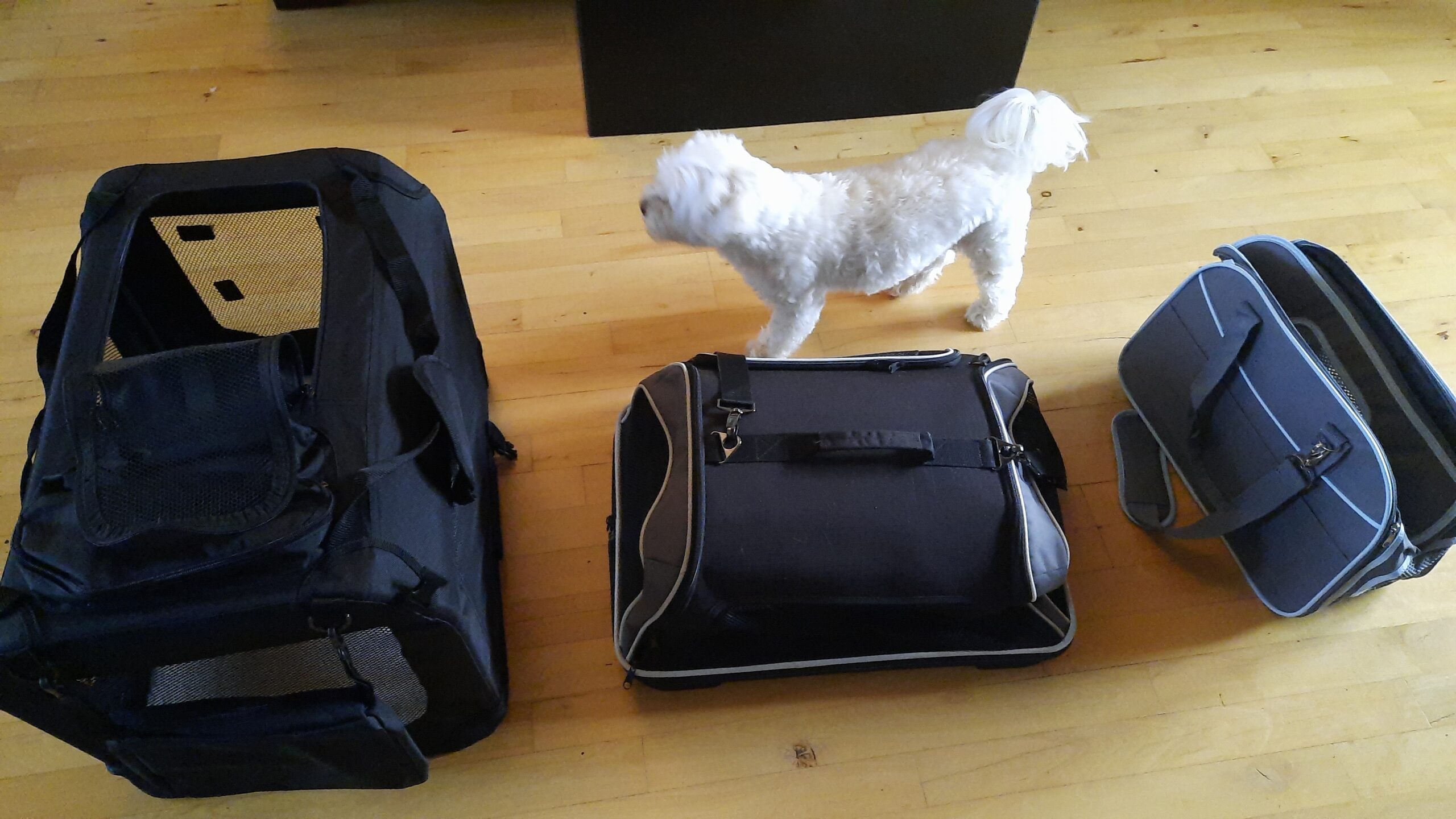
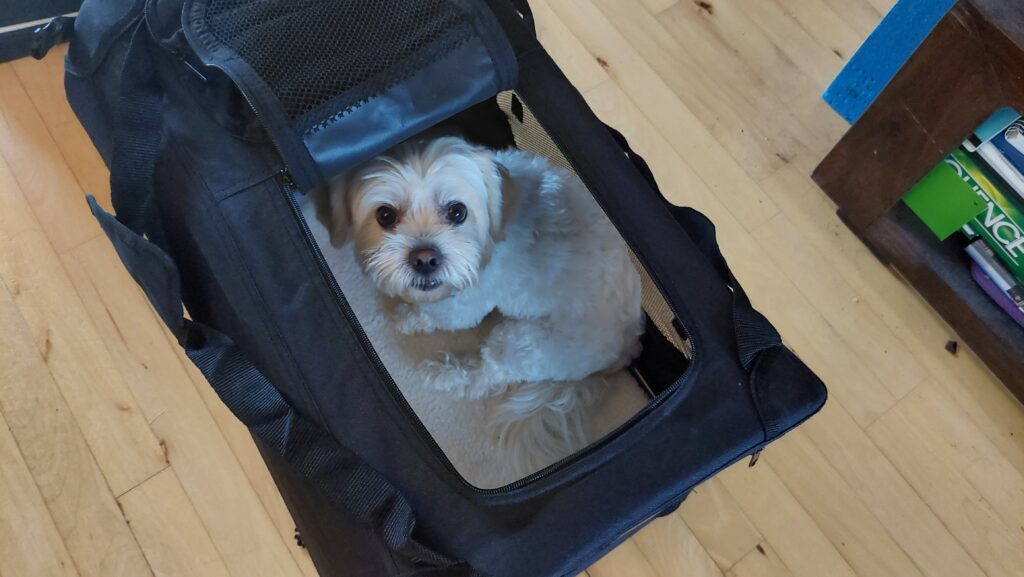
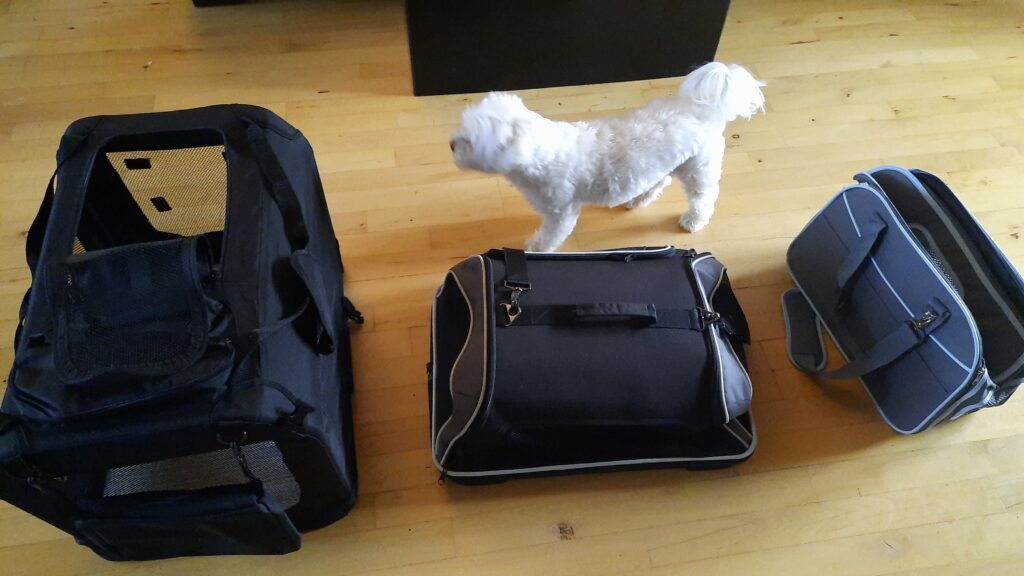
We bought a too-small carrier (he fit, but couldn’t turn around) before settling on a light, larger Trixie bag sized for the bigger airline allowance.
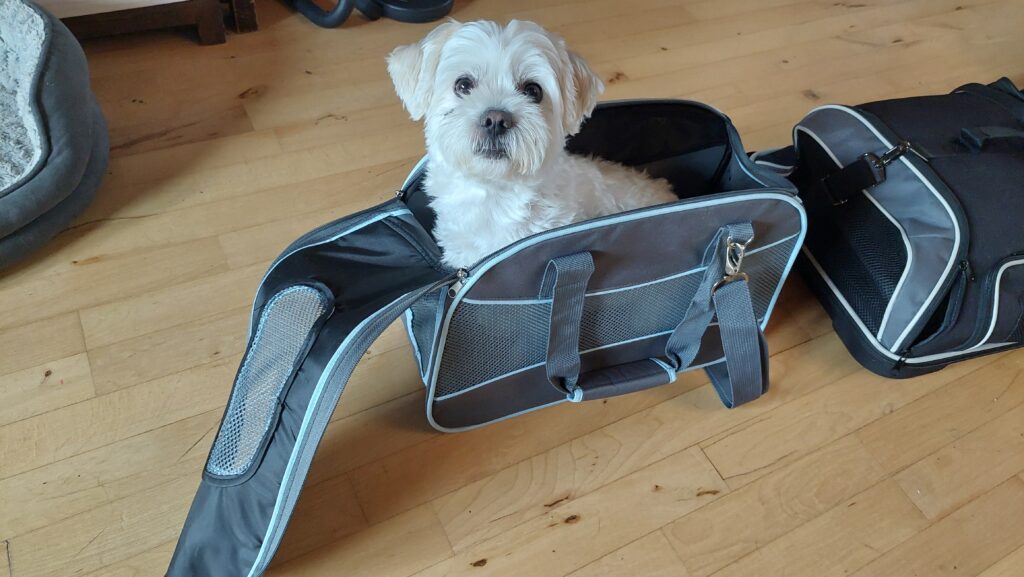
Our first instinct was the cautious one — the smaller bag that fits every airline, including the restrictive ones. Sofus fit technically, but couldn’t turn around, which fails the condition above. The bag that worked was a Trixie Airline Boarding Carrier (55×40×20 cm): light, with a padded waterproof base and mesh on multiple sides. With airlines like LOT, the catch is that the larger allowance can depend on the aircraft type — so a larger bag is sometimes a calculated bet. Read our LOT cabin flight account for how that gamble played out.
Big dog? The 2026 landscape
If your dog is over roughly 6 kg, the train is usually the calmer choice — but a few new in-cabin options for larger dogs are emerging in 2026.
The 8 kg wall is starting to crack: from summer 2026 ITA Airways allows dogs up to about 30 kg in the cabin on domestic Italian flights, and pet-jet services like Bark Air and K9 Jets fly any size in-cabin from cities including Berlin, Stockholm, London and Paris — but at thousands per seat. For most people with a larger dog, the honest 2026 reality is still the hold (which we were never willing to use), or another way entirely: train, ferry or car. That’s why our whole guide is built around the train.
FAQ
Which airlines allow the biggest cabin dog carrier in Europe?
The Lufthansa Group (Lufthansa, Swiss, Austrian, Brussels, Eurowings) plus airBaltic and Finnair allow up to 55×40×23 cm. SAS, Norwegian, KLM and Air France use smaller boxes.
What’s the weight limit for a dog in the cabin?
Almost universally 8 kg combined — dog, carrier and contents. A light carrier already eats into that, so a dog much over 6 kg is borderline.
What size carrier do I need?
One that lets your dog stand, turn around and lie down — and fits the airline’s box. Dog length nose-to-tail plus 10 cm, shoulder height plus 8 cm, as minimums.
Can a big dog fly in the cabin?
Rarely in 2026, but it’s changing: ITA Airways (domestic Italy, up to ~30 kg) and expensive pet-jet services are early exceptions. Otherwise it’s the hold, or train/ferry/car.
The full guide covers the carrier decisions in detail, plus five train operators, three cities, and the honest costs of a two-month trip with a small dog. €19, instant PDF plus a phone-friendly online version.